Seven practical dessert presentation ideas that can make a simple sweet dish feel more memorable — without rebuilding your kitchen or redesigning your menu.
The brownie was perfectly fine.
Warm chocolate, a scoop of vanilla ice cream, a little chocolate sauce. Nothing wrong with it.
But there was nothing particularly memorable about it either.
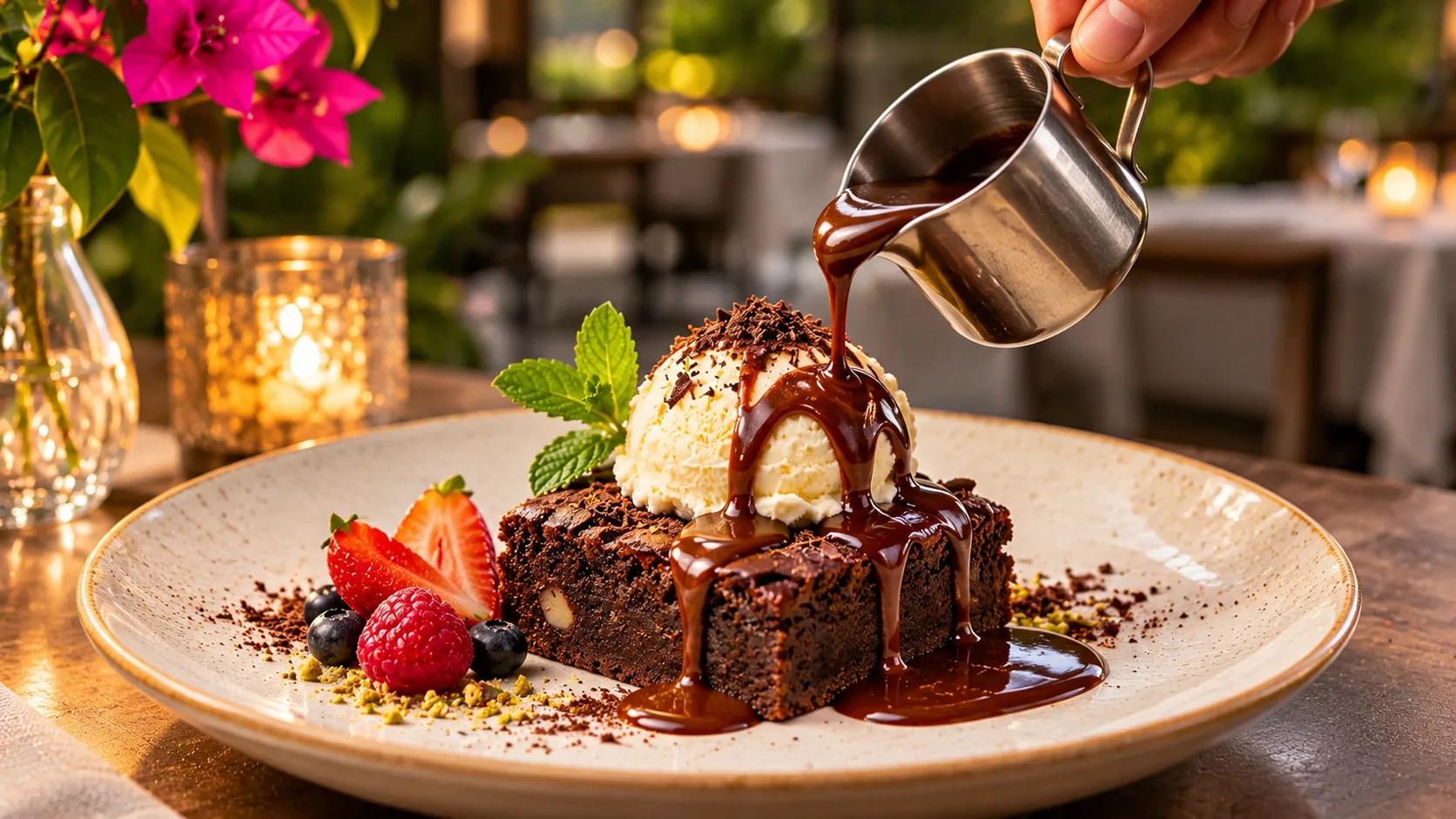
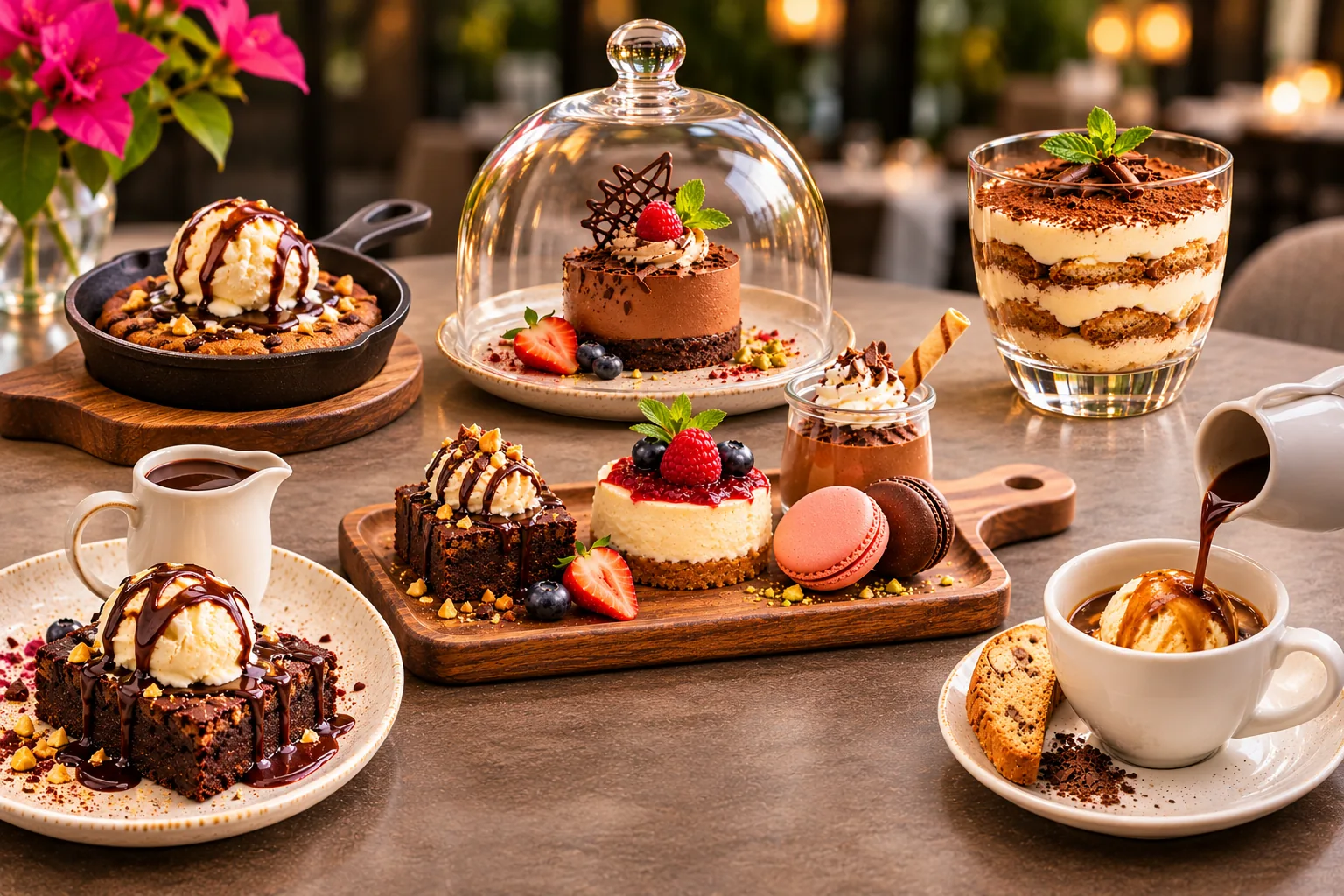
Now picture the same brownie arriving at the table with the chocolate sauce in a small ceramic pitcher.
The server places the plate down, asks if the guest would like the sauce poured, and slowly finishes the dessert at the table.
The chocolate runs over the ice cream and settles around the warm brownie.
It takes perhaps ten extra seconds.
The recipe hasn’t changed. The portion hasn’t grown. The kitchen hasn’t bought a new machine.
But the guest has experienced something different.
That’s the opportunity I want restaurant owners to think about: sometimes the difference between serving a dessert and creating a dessert experience is surprisingly small.
And occasionally, the only new equipment you need is a serving accessory that costs around $20.
Why dessert presentation matters more than we think
There’s a reason chefs spend time thinking about the appearance of food.
People begin forming impressions before taking their first bite.
A 2015 study published in Appetite examined how different plating arrangements affected diners during a real dining event involving 163 participants.
The researchers found that changing the visual presentation of the same food affected diners’ evaluations, including their willingness to pay.
For one appetizer, the artistically arranged version received a mean willingness-to-pay rating of £5.94, compared with £4.10 for the alternative arrangement.
The study wasn’t specifically about a $20 dessert accessory. But it provides evidence that presentation can influence perceived value.
Read the research in Appetite.
More directly relevant to desserts, a 2024 study published in Foods examined how plate size, shape, and colour influenced consumer perceptions of desserts.
The research involved 1,005 respondents and found that these presentation choices affected perceived attractiveness, portion size, and expected price.
One particularly useful finding was that larger plates could make the same dessert appear smaller.
That matters because restaurants often spend money on elaborate decorations while overlooking the plate itself.
But there is an important distinction.
Making food look more valuable is not the same as proving that customers will buy more of it.
That still needs to be tested in your own restaurant.
Here are seven practical ways to begin.
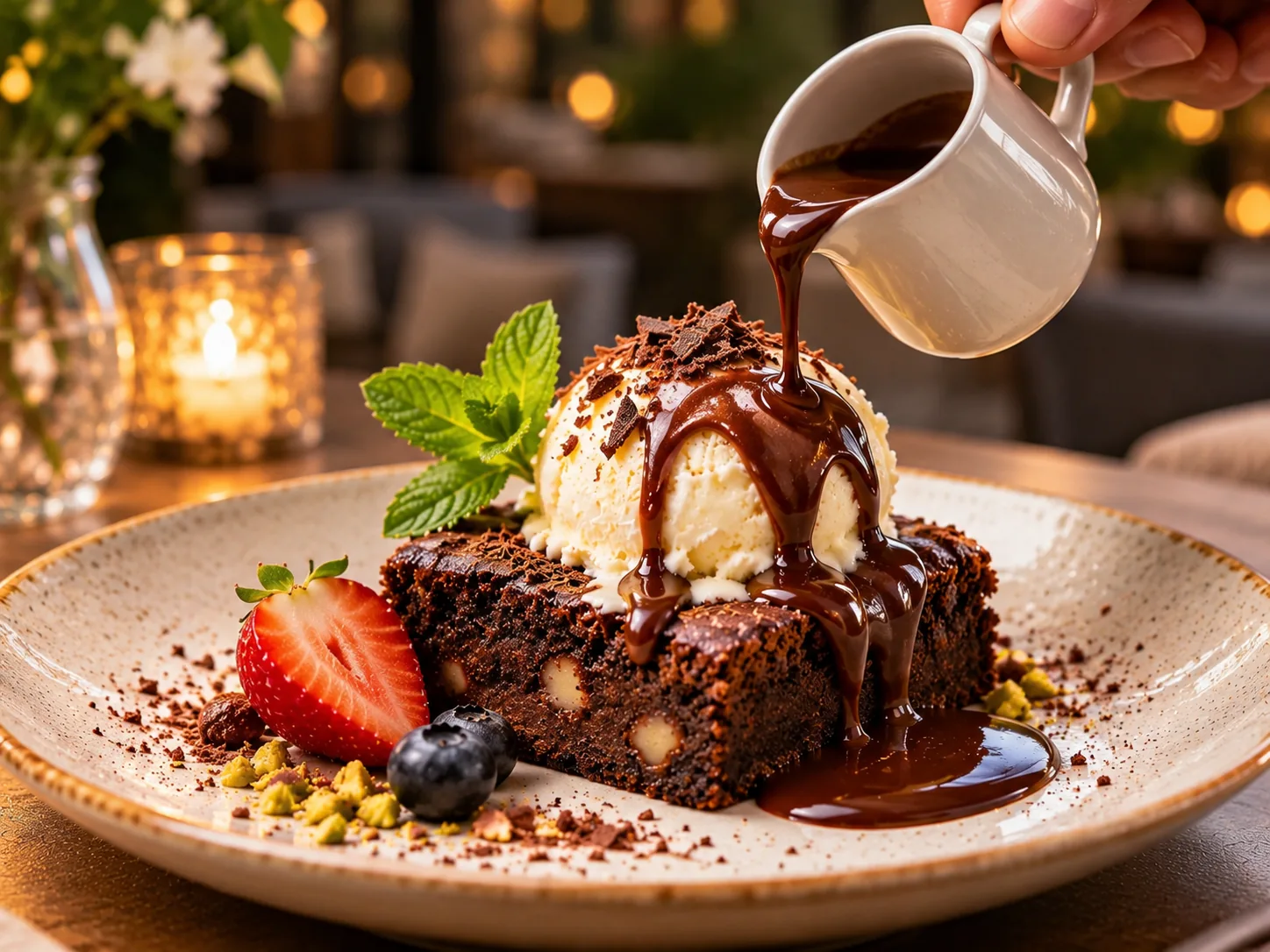
1. The miniature sauce pitcher: Give guests the final touch
Best for: Brownies, cheesecakes, waffles, pancakes, sticky toffee pudding and ice cream.
If I were choosing one accessory to test first, this would be it.
A miniature sauce pitcher is simple, versatile, and relatively easy to introduce.
Instead of covering the dessert with sauce in the kitchen, serve the sauce separately.
The guest can pour it themselves, or the server can finish the dessert at the table.
It creates a small moment of interaction without requiring theatrical service.
What to buy
Look for a food-safe stainless steel or ceramic pitcher with a controlled pouring lip.
A capacity of roughly 50–100 ml can work for many individual dessert sauces, although the ideal size depends on the recipe.
Avoid oversized pitchers. They can make the portion look small and may encourage inconsistent sauce servings.
Check whether the product is suitable for hot liquids and commercial dishwashing.
How to use it
Imagine a classic chocolate brownie.
Instead of adding the chocolate sauce before service, place a measured portion in the pitcher.
The server presents the dessert and says:
“Would you like me to pour the warm chocolate sauce for you?”
That’s it.
No long speech. No complicated performance.
What it might cost
For planning purposes, assume an accessory budget of $10–20 per pitcher.
This is a purchasing allowance, not a verified supplier quote. Actual prices vary by material, size, seller and quantity.
The Qasim Verdict
This is my first choice for a restaurant that wants to improve dessert presentation without slowing down service significantly.
The same pitcher can potentially be used for chocolate sauce, caramel, berry coulis and other suitable sauces.
Just make sure the kitchen standardizes the portion and the service team knows how to present it.
A beautiful pitcher is useless if it leaks chocolate across the table.
2. The mini skillet: Make the dessert arrive with character
Best for: Cookie skillets, brownies, fruit crumbles and baked chocolate desserts.
Some desserts benefit from being served in the same style of vessel in which they’re prepared.
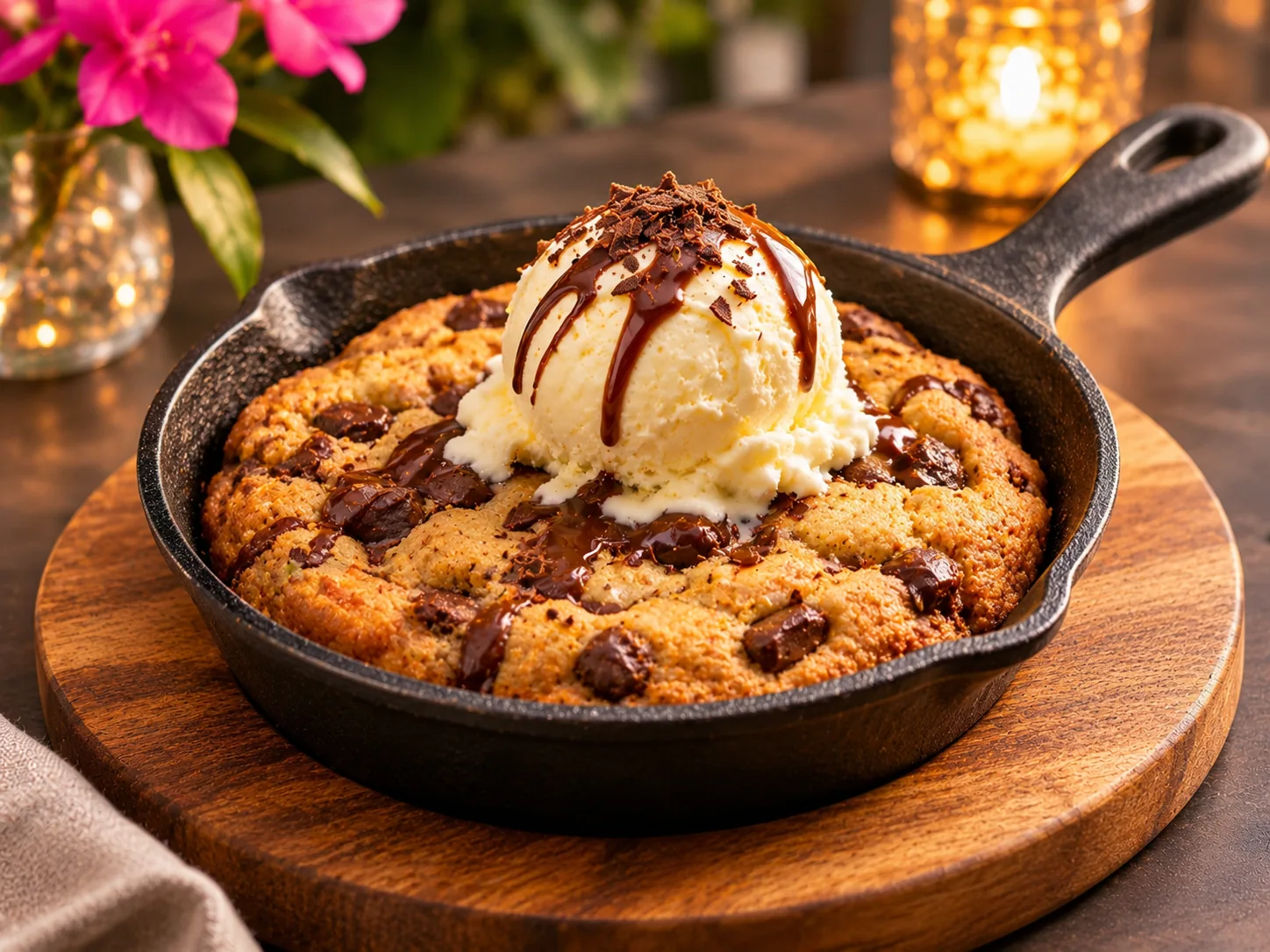
A small cast-iron skillet can make a simple baked dessert feel generous, rustic and comforting.
Picture a warm chocolate-chip cookie in a miniature skillet, topped with vanilla ice cream.
The skillet gives the dish a distinct identity.
It also creates a recognizable presentation that guests may associate with your restaurant.
What to buy
Look for a food-safe miniature cast-iron skillet with an appropriate serving base or protective board.
Check the skillet’s dimensions, weight, handle design, cleaning requirements and compatibility with your cooking equipment.
Don’t assume that every decorative mini skillet is suitable for oven use.
The operational problem
Hot cookware can be dangerous.
If a skillet is served hot, staff need a clear procedure for transporting it, placing it on a heat-resistant surface, and warning guests about hot surfaces.
It may also retain heat long after leaving the kitchen.
For a busy family restaurant, this requires particular care.
The Qasim Verdict
A mini skillet works best when the dessert itself suits the presentation.
I wouldn’t put an ordinary slice of cake in cast iron just because it looks interesting.
Choose the accessory because it improves the dish, not because it looks good in a supplier catalogue.
3. The glass cloche: Turn presentation into a reveal
Best for: Small cakes, chocolate creations, petit fours and celebration desserts.
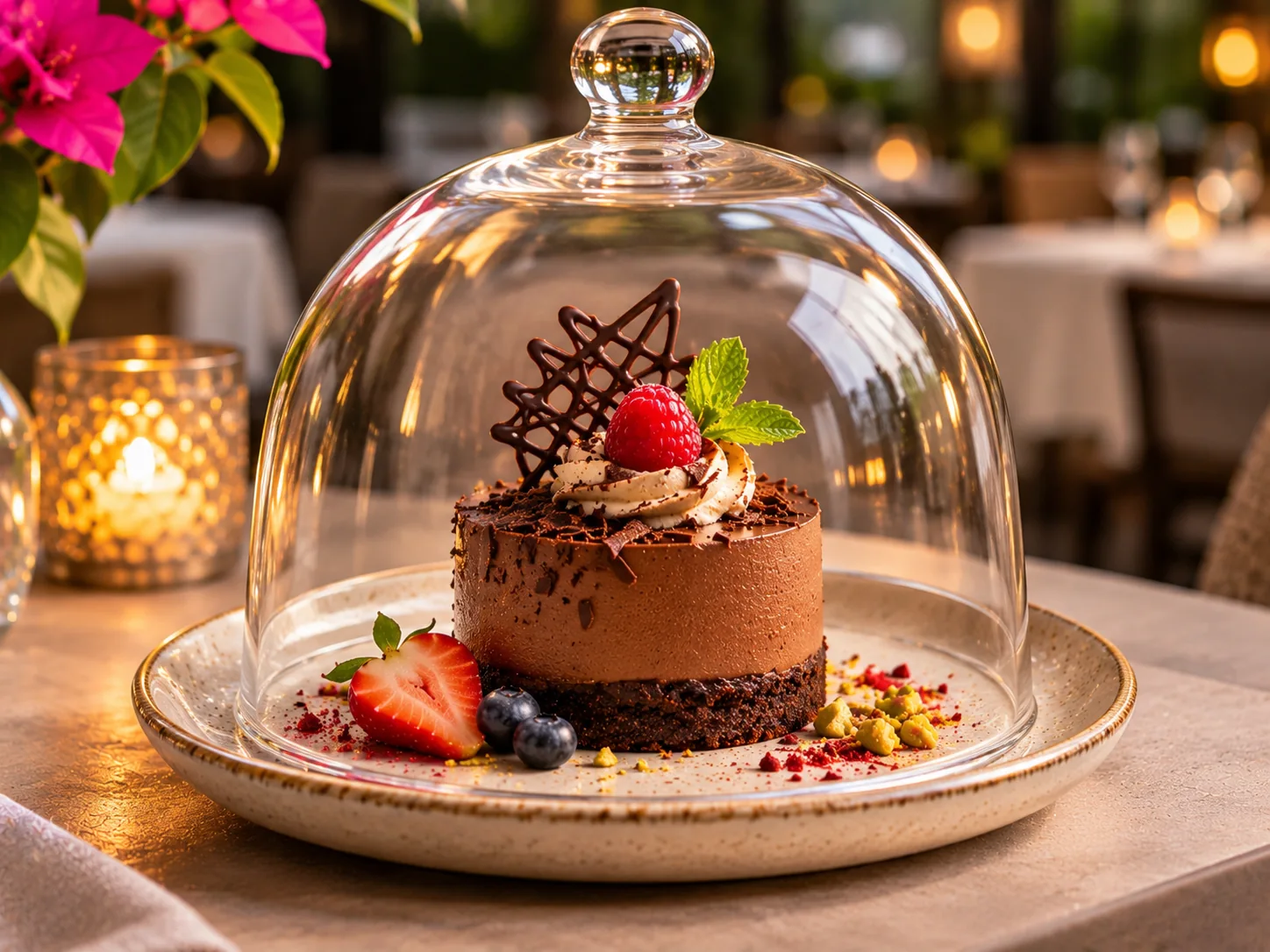
A glass cloche is a transparent dome placed over a dish.
It can make a dessert feel like something being unveiled.
The server places the dessert on the table and lifts the cover.
For a special-occasion dessert, that simple movement can create anticipation.
It also gives the guest a moment to appreciate the presentation before eating.
What to buy
Choose a stable, food-appropriate cloche with a comfortable handle and a base that fits the dessert.
Check the weight, fragility, cleaning procedure and storage requirements.
For high-volume restaurants, breakage and service time matter.
Do you need smoke?
No.
And I would avoid beginning with smoke effects.
A well-presented dessert beneath a clean glass cover can look impressive without additional effects.
Dry ice and liquid nitrogen introduce serious safety concerns if handled incorrectly.
The US Food and Drug Administration warns about injuries from direct contact with or accidental consumption of these substances and advises food businesses to establish proper procedures and training.
The Qasim Verdict
Use a cloche for selected premium desserts or celebrations, not every order.
The reveal should feel special.
If every plate arrives under a dome, the effect may quickly become ordinary — while the dishwashing team gets considerably busier.
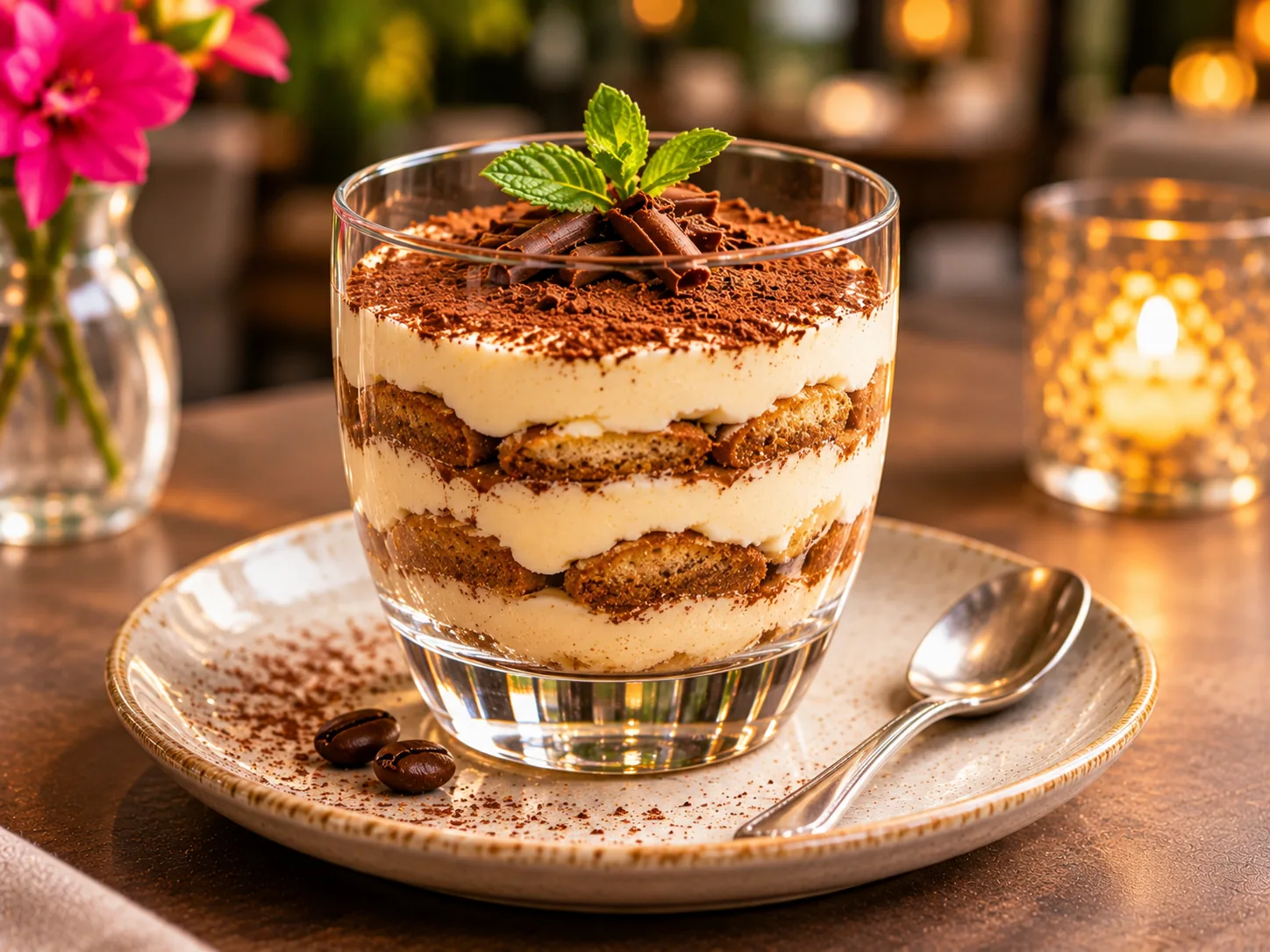
4. The dessert glass: Change the container, not the recipe
Best for: Tiramisu, mousse, layered puddings, cheesecake cups and fruit desserts.
Not every improvement requires a new technique.
Sometimes, the serving vessel itself makes the difference.
A simple layered dessert can look much more attractive in a clear glass that reveals its different textures.
Think chocolate mousse with a biscuit layer, or cheesecake cream with fruit compote.
The guest can see the dessert before tasting it.
What to buy
Look for sturdy, commercial-grade dessert glasses with a stable base and a shape that is easy to fill and clean.
Check capacity carefully.
A very large glass can make a normal portion look disappointing.
A narrow glass may look elegant but become difficult to eat with an ordinary spoon.
Make it practical
Prepare the desserts in advance where food safety and recipe quality permit.
Standardize the layers and garnishes.
Keep the presentation consistent so that every guest receives the same experience.
The Qasim Verdict
For a restaurant serving high volumes of desserts, a well-chosen glass may be more useful than an elaborate tableside presentation.
It can improve visual appeal without adding much work during the busiest service periods.
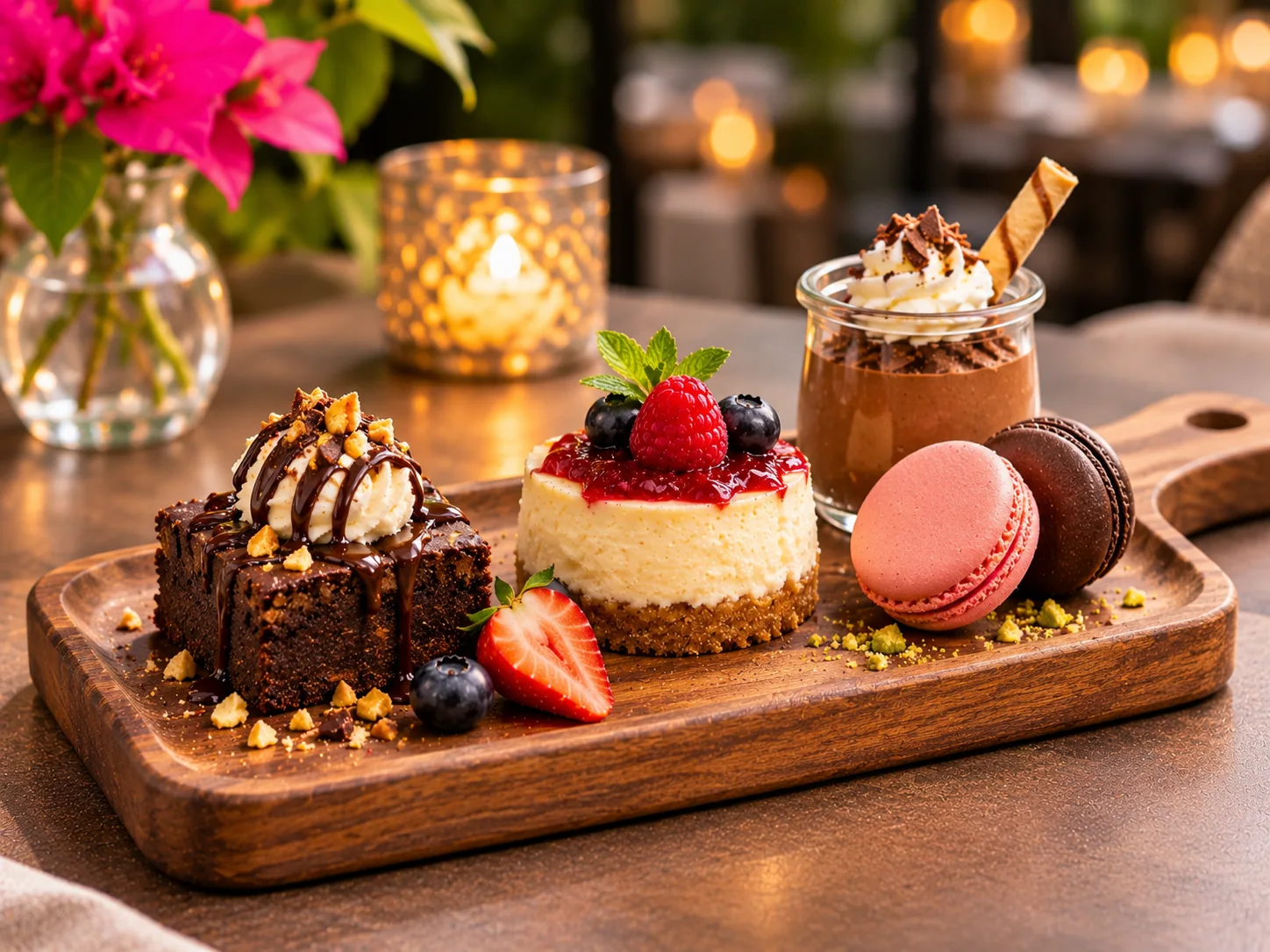
5. The small dessert board: Make sharing part of the experience
Best for: Mini brownies, macarons, cookies, petit fours and tasting selections.
Restaurants often focus on selling one dessert to one person.
But what about the table that wants something sweet without ordering four full portions?
A small dessert-sharing board can offer an alternative.
Imagine three or four miniature desserts arranged on an attractive serving board.
The guests can try different flavours and share the experience.
What to buy
Consider a commercial serving board or platter that is appropriate for direct food contact, or use food-safe dishes placed on the board.
Choose materials that can be cleaned and sanitized effectively.
Avoid rough, cracked or porous surfaces that cannot be maintained hygienically.
The menu opportunity
Instead of calling it a “dessert platter,” give it a clear identity.
The Sweet Ending
A selection of three miniature desserts designed for two people.
Or:
The Chocolate Collection
Three different chocolate-based desserts served together.
The concept should be easy for staff to explain.
The Qasim Verdict
A dessert board can be useful for couples, families and groups.
But the food cost needs attention.
Three miniature desserts aren’t automatically cheaper to produce than one full-sized dessert.
Cost the individual components before deciding on a selling price.
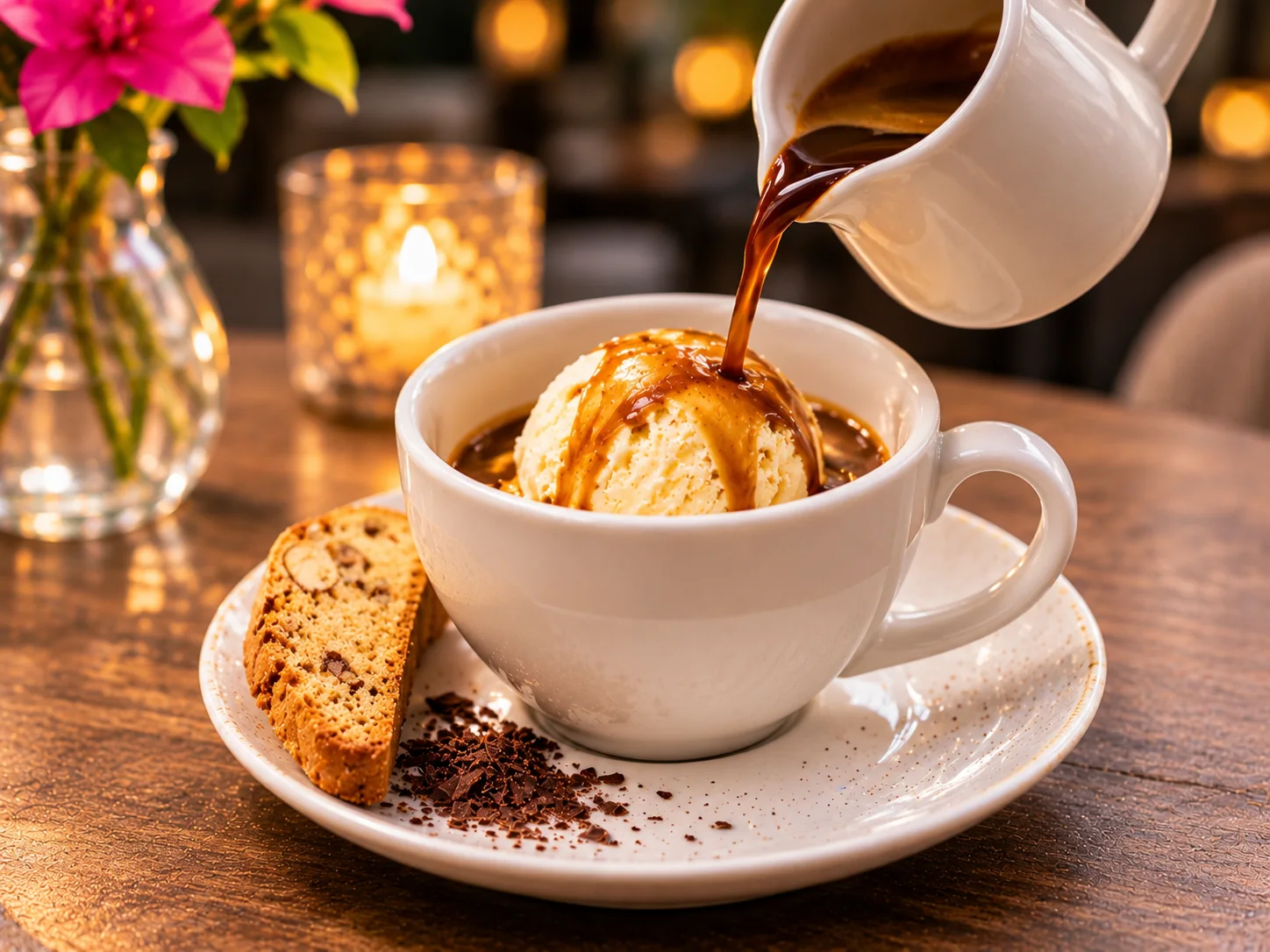
6. The espresso cup: Make a small dessert feel intentional
Best for: Affogato, chocolate mousse, panna cotta variations and miniature desserts.
One of the simplest presentation ideas is to serve a small dessert in a cup designed for a different purpose.
A good-quality espresso cup can make a modest dessert portion feel deliberate rather than undersized.
For example, a small chocolate mousse served with a crisp biscuit can work as a lighter ending to a meal.
Or consider an affogato, where espresso is poured over ice cream.
The pouring action itself becomes part of the experience.
What to buy
Choose cups that suit the temperature, portion size and service style.
If hot espresso will be added, verify the cup’s thermal suitability.
Consider how easily guests can reach the dessert with a spoon.
The Qasim Verdict
This is particularly interesting for restaurants whose guests often say they’re too full for dessert.
A smaller, well-presented option might appeal to them.
But don’t assume smaller portions will automatically increase sales. Test the menu wording, pricing and actual order rate.
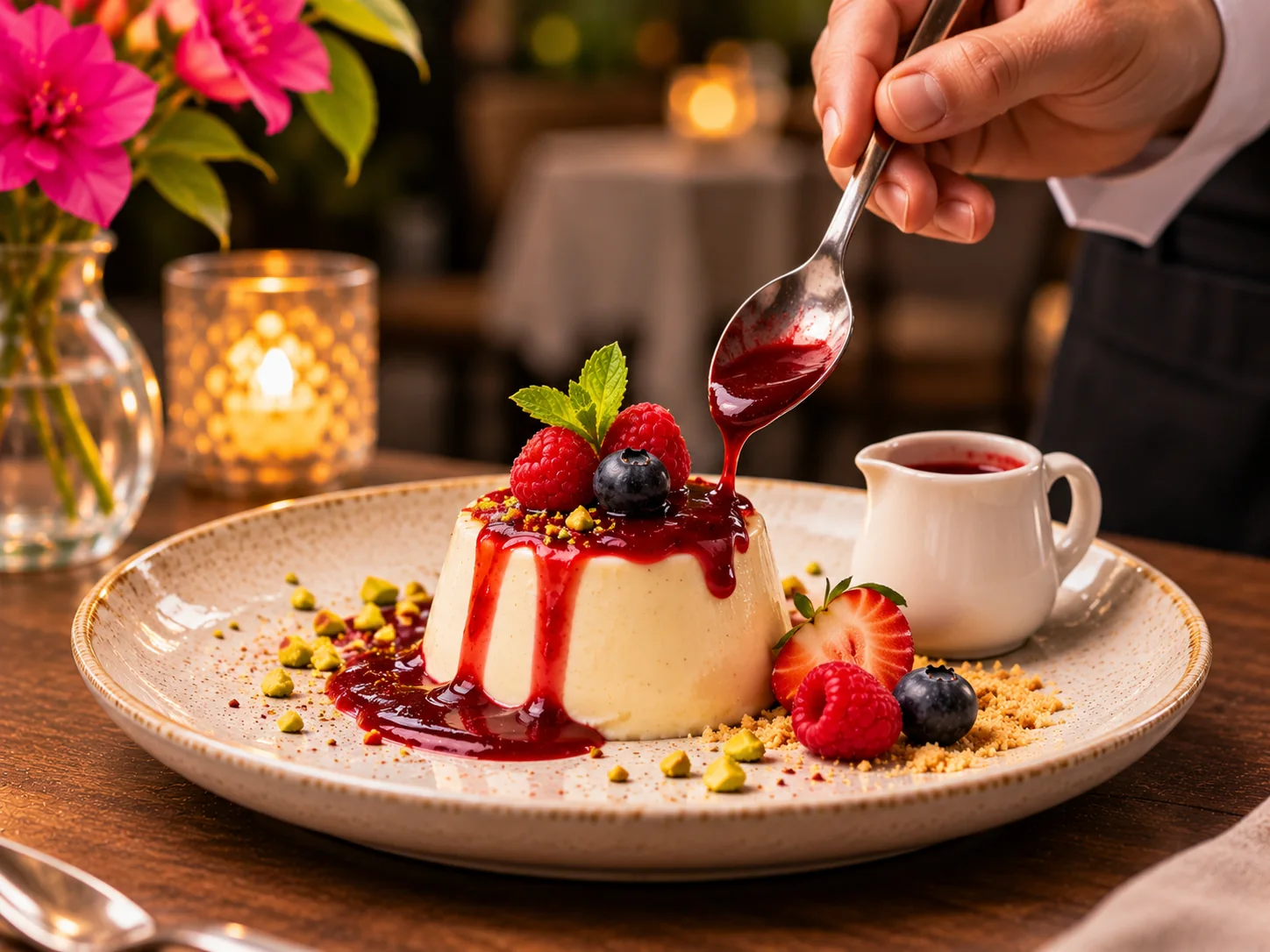
7. The finishing spoon: Let the server complete the dessert
Best for: Cheesecake, panna cotta, chocolate cake, ice cream and plated fruit desserts.
Sometimes the accessory isn’t a dramatic object at all.
It’s a small serving spoon or controlled sauce dispenser.
The restaurant prepares the dessert in the kitchen, but leaves one final element to be added at the table.
That might be berry coulis, caramel sauce or another suitable finishing ingredient.
The idea is to make the last few seconds of service feel personal.
Keep the interaction short
A good tableside finish should not require the server to deliver a speech.
Something as simple as:
“Would you prefer the berry sauce on top or on the side?”
gives the guest a choice.
It also helps accommodate different preferences.
The Qasim Verdict
This works when the service team is trained and the finishing step is quick.
It doesn’t work if servers are already overwhelmed or the process creates delays.
A ten-second experience is attractive.
A three-minute wait for a spoon is not.
Which dessert accessory is worth buying first?
Before spending money, compare the ideas from an operational perspective.
| Accessory | Guest interaction | Service complexity | Best use |
|---|---|---|---|
| Mini sauce pitcher | High | Low | Brownies, cakes, waffles |
| Mini skillet | Medium | Medium–High | Warm baked desserts |
| Glass cloche | High | Medium | Premium or celebration desserts |
| Dessert glass | Low | Low | Layered desserts |
| Sharing board | Medium | Medium | Groups and couples |
| Espresso cup | Medium | Low | Small desserts, affogato |
| Finishing spoon | High | Low–Medium | Sauces and garnishes |
These are editorial assessments, not independently tested product rankings.
For a busy casual restaurant, I would begin with the miniature sauce pitcher.
For a boutique hotel restaurant, I might test the glass cloche on one signature dessert.
For a high-volume family restaurant, durable dessert glasses or small sharing platters may be easier to manage.
The right choice depends on your menu, staff and customers.
The numbers: Can a $20 accessory actually make money?
Let’s take the miniature sauce pitcher.
Assume the restaurant buys one for $20.
It introduces a tableside chocolate brownie experience and tests a $2 premium over the standard dessert price.
The additional cost of sauce, service and other consumables is estimated at $0.50 per order.
That leaves an illustrative incremental contribution of $1.50 per upgraded order.
At 30 upgraded orders per month:
30 × $1.50 = $45 in additional monthly contribution.
The $20 accessory would theoretically be recovered after about 14 incremental upgraded orders.
But there are important qualifications.
This calculation assumes customers actually accept the premium and that the $0.50 estimate captures the relevant incremental variable costs.
It doesn’t include breakage, additional fixed labour, tax or other overhead.
And if the new presentation simply replaces an existing dessert sale without generating a price premium or extra orders, the financial result will be different.
That’s why the question isn’t just whether the dessert looks better.
It’s whether the new presentation improves the business.
Measure three things
Dessert attachment rate: How many dining parties order dessert?
Average dessert contribution: How much money remains from each dessert after the relevant direct costs?
Service time: Does the new presentation add delays or create extra work?
For a more structured approach, Cornell University’s menu-performance worksheet explains how to evaluate menu items using contribution margin, popularity and direct operating expenses.
Where to source dessert serving accessories
For small quantities, Amazon and established restaurant-supply retailers can be useful starting points.
Search for:
- Mini stainless steel sauce pitcher
- Commercial dessert sauce jug
- Mini cast-iron dessert skillet
- Glass food serving cloche
- Commercial dessert verrine glasses
- Food-safe dessert serving board
- Porcelain espresso cups
For bulk purchases, explore Alibaba or contact commercial tableware manufacturers directly.
But be careful with products advertised mainly for home decoration.
A decorative dome, wooden board or miniature vessel isn’t automatically suitable for commercial food service.
Ask about food-contact suitability, temperature limits, dishwasher compatibility, breakage, replacement availability and relevant certifications.
The FDA Food Code provides useful guidance on food-service equipment, utensils, cleanability and sanitation.
Requirements vary by country and jurisdiction, so verify the rules that apply to your restaurant.
The seven-day dessert presentation experiment
You don’t need to redesign the entire dessert menu.
Choose one popular item and run a controlled trial.
Day 1: Establish the baseline
Record its current selling price, food cost, order volume and preparation time.
Day 2: Select one accessory
Choose a pitcher, glass or other practical item that suits the dessert.
Day 3: Standardize the presentation
Agree on the sauce quantity, garnish, serving procedure and cleaning process.
Day 4: Train the team
Demonstrate the service. Make sure staff can deliver it consistently.
Days 5–7: Test and observe
Offer the new presentation to a defined group of guests or during selected comparable service periods.
Record sales, guest comments, additional costs, service time and any operational problems.
Seven days is a useful pilot, not enough to establish a reliable long-term effect. For a stronger comparison, repeat the test across comparable weekdays and weekends, and avoid changing multiple factors at once.
If the new presentation increases contribution without damaging service quality, continue testing.
If it looks wonderful but slows the kitchen and creates extra cleaning, reconsider it.
Five mistakes I would avoid
1. Buying accessories before choosing the dessert.
The accessory should solve a presentation problem, not create a new one.
2. Using dramatic effects without safety procedures.
Smoke, extreme temperatures and fragile serving equipment require appropriate controls.
3. Making every dessert theatrical.
A special presentation loses its impact when everything is presented as a performance.
4. Ignoring the dishwashing team.
An accessory that takes 15 seconds to use but several minutes to clean can create hidden labour costs.
5. Mistaking social media attention for profitability.
A dessert can attract photographs without generating enough additional contribution to justify the work.
The Qasim Verdict: The accessory isn’t the experience
So, can a $20 serving accessory turn an ordinary dessert into an experience?
Yes, it can help — provided the dessert, presentation and service work together.
A small sauce pitcher can create a moment of interaction.
A glass cloche can make a celebration dessert feel special.
A well-chosen dessert glass can improve presentation without complicating service.
But none of these products will rescue a poor recipe, inconsistent portions or inattentive service.
The best dessert presentation ideas aren’t necessarily the most expensive or dramatic.
They’re the ones guests enjoy, staff can deliver consistently, and the restaurant can afford to repeat.
Before ordering a new dessert machine or redesigning the menu, take a look at the accessories your kitchen already has.
You might be closer to a memorable dessert experience than you think.
Sometimes, the finishing touch is the entire difference.
Sources & Further Reading
- Michel et al. (2015), Appetite — Studying the impact of plating on ratings of food served in a naturalistic dining context. Research on plating arrangements, diner evaluations and willingness to pay.
- Foods (2024) — Effect of Shape, Size, and Color of the Food Plate on Consumer Perception of Dessert. Study of 1,005 respondents examining dessert presentation, portion perception and expected price.
- Rowley and Spence (2018), Appetite — Visual composition, portion size and preference. Research on how dessert arrangement affects visual perception.
- Cornell University — How to Evaluate Menu Item Performance. Practical menu engineering and contribution-margin analysis.
- US FDA — Food Code 2026. Guidance on equipment, utensils, cleaning and sanitation.
- US FDA — Liquid Nitrogen and Dry Ice in the Food Code. Safety considerations for theatrical food and beverage presentations.
Editorial disclosure: Product categories are suggested for research and purchasing evaluation. No products described here have been personally tested for this article. Financial examples are illustrative, not actual restaurant results or guaranteed returns. If affiliate links are added, a clear affiliate disclosure should appear near the beginning of the published article.